Friday, 18 September 2015

NHL 16: An Improvement, But Still Missing Something

EA Sports' NHL franchise has been struggling over the past year, and with their latest instalment, they looked to put their problems behind them and finally release a complete product. However, that's still not the case. While NHL 16 does improve on some of the missing features in NHL 15, it still feels like the game itself is missing something that would finally put it back into the top shelves of every sports gamer.


     EA Sports finally brought back EASHL, and they touted it as the top "new" feature for this installment. Through ten games or so I can say it's great to have the mode back in the game, but there are some rather odd decisions EA made that I still don't quite understand. First and foremost, why aren't we able to edit our height and weight? If you're offering a "realistic" and "dynamic" game, how come we can't even edit our player's height? I love to be a power forward but I'm definitely not 6'3/215lbs, but now I'm restricted to being a certain build based on my player type, opposed to the old games where you could edit your player limitlessly. I get that they don't want 5'7 enforcers or 6'11 snipers, but maybe just implementing a more strict height/weight limit for each specific player build might've been a better idea. Also, I've noticed that the A.I. is still pretty terrible thus far in club, especially on defence. I can't count how many times my d-men have got caught behind the net in a daze before they're ran over and stripped of the puck, or where they simply turn the puck over for no apparent reason. I get that the A.I. are supposed to be inferior in this game mode but EA should at least look into making them have a little more hockey I.Q. In the bigger picture however, I'm just glad they brought back the mode so I can finally play NHL with my friends.
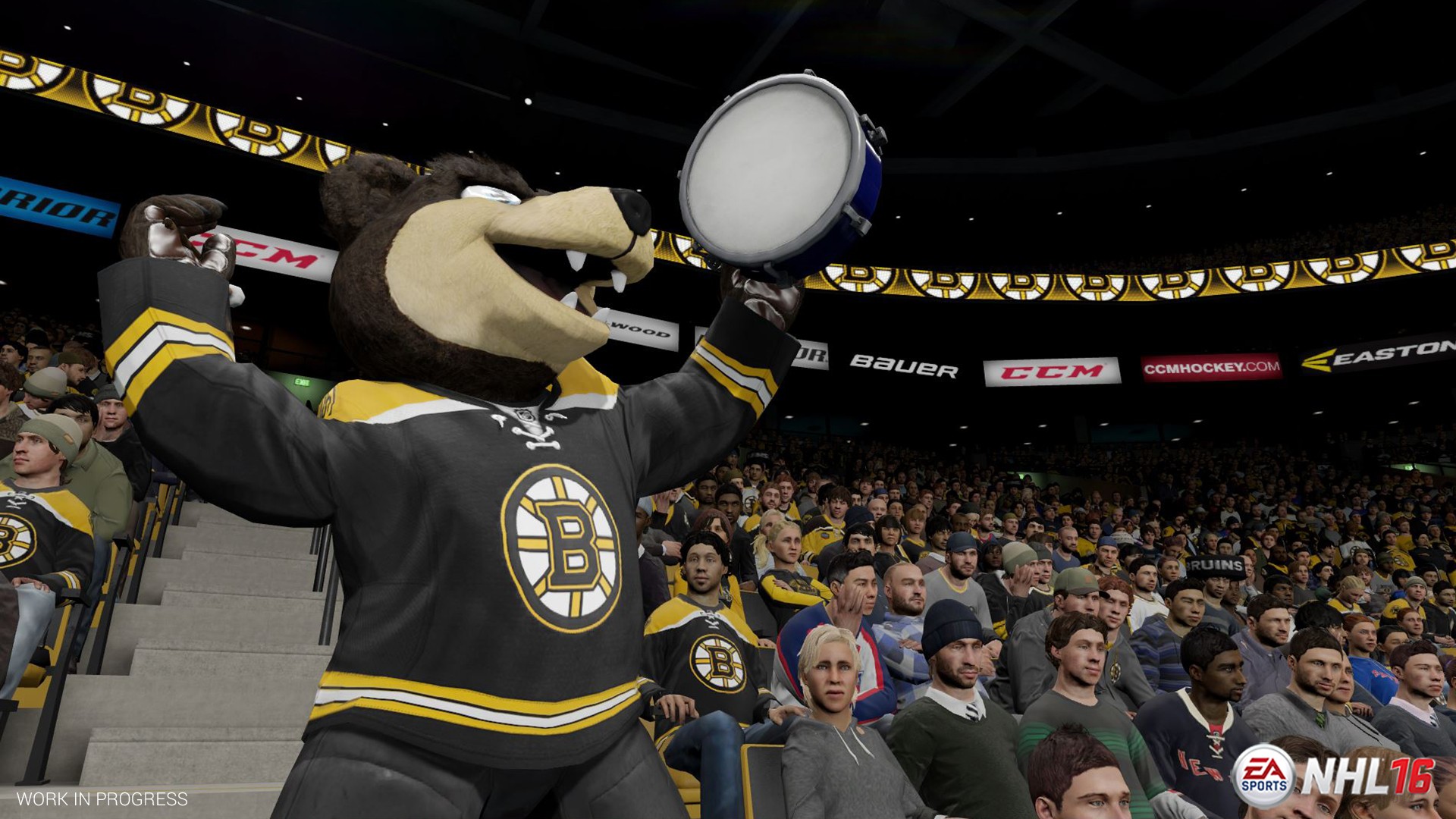

     Aside from the addition of EASHL, not much else is new around here. They've added mascots that dance around behind the opposing net all game, and they've brushed up on some of the arenas around the league, but all of that is off the ice. I want a better on-ice game. I still feel the skating technique is off, but I can't quite put my finger on which aspect of it needs to be changed, it just doesn't feel smooth, or like skating. Also, poke checks are massively over-powered thus far (as they were in 15 as well) and EA needs to look into nerfing the poke check and focusing more on staying with the puck carrier and playing the body more on defence. I've had no issues with the goaltenders thus far, other than the new controls are a bit wonky. I'm a fan of the new precision pushing system and the pad slides with the right stick, but pressing L2/LT to go into butterfly and L1/LB to hug your posts still hasn't caught on for me. The new quick dekes are neat, but nothing game-breaking. For NHL 17, I hope EA focuses more on the on-ice portion of the game and less of the off-ice part. An authentic looking arena is nice and all, but if the gameplay itself isn't up to par I don't really care.


No new changes to Hockey Ultimate Team for the most part. You still feed in loads of money in order to get a good team, the only difference is there is no longer duration cards for player boosts, so in other words you can't train prospects to be high overalls (well you can, but for one game only), so the likes of Connor McDavid will still be valuable for the name, but they can't actually do much. It seems like you get more in packs these days however, as I've only bought a handful of jumbo premium packs aside from my starter packs and have actually pulled some decent value players such as Darren Helm and Brandon Saad. Working the market is still the best way to get coins, as I've started from around 20,000 coins and now have worked my way up to around 150,000 coins in just three days by playing the market.


I haven't really dove into Be A GM mode yet, but the new features look promising with player morale being more of a factor in this year's instalment. If the loading times aren't as painfully slow as last year and the player progression improves, it looks like you could be spending the majority of your time on this game on this mode (as usual). While it's nice to see EA make some improvements on Be A GM mode, I'm still waiting for the return of GM Connected, which will probably be the "new" feature come NHL 17/18.
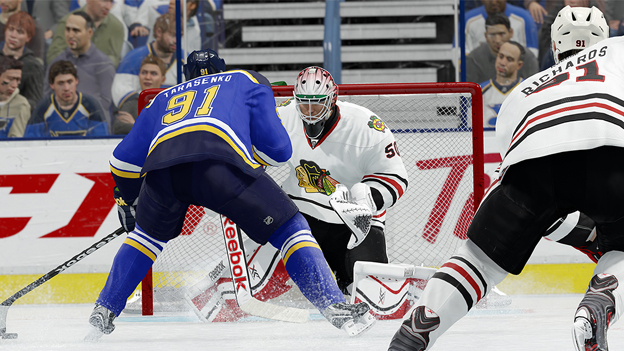

Don't bother with Be A Pro, you still can't sim to your shifts, have fun sitting on the bench for four minutes in between shifts!

Still no soundtrack? Come on.

While the re-addition of EASHL brought some new life into the game, EA Sports' NHL 16 still fails to meet the grade of its' predecessors. The gameplay isn't far off of NHL 15, and there's nothing groundbreaking about the game that would put it far above the last instalment. It's a shame that amongst EA's array of great sports titles that they still can't figure out how to get NHL up there with the Madden/FIFA games, funding is the main reason but even back in the early 00's they had the same budget and produced some of the best hockey games ever. If EA Sports can go back to its' roots and find what made their older games great, maybe it will have a broader fanbase and a more enjoyable product. For now, it's back to the drawing board.

Monday, 27 April 2015

Armchair GM: Canucks 2015 Off-Season


     After a few days to take in the season as a whole, the Canucks finished exactly where they were expected to be at the start of the season. Although they got off to a hot start to the year, the Canucks wound up a bubble team come April and made the playoffs in the last week of the season. Despite being the heavy favourites to advance to the second round against a Mark Giordano-less Calgary Flames squad, the Canucks offence ran dry and their defence was all over the place. Veteran presences such as Kevin Bieksa, Ryan Miller and Dan Hamhuis seemed more jittery than the rookies on the opposing team at times, and the Canucks' experience was outmatched by the Flames' skill and determination.


     With the recent contract renewals of Luca Sbisa (3 years, $3.6M per) and Derek Dorsett (4 years, $2.65M per), it seems cap space will be hard to come by in the near future for Jim Benning and company. Ryan Miller is still under contract for another two years, while Radim Vrbata has another year remaining on his $5M per contract. This leaves much speculation to be that Shawn Matthias is going to be testing the free agent markets, as he potted 17 goals during the regular season and will be looking for a contract that the Canucks simply cannot afford to give him. Other players that could be on their way out include Yannick Weber and Brad Richardson, both of which enter the summer without a contract extension for next season and possibly seeking more money this time around.


     As many Canucks fans learned with the Roberto Luongo contract situation, some contracts simply cannot be moved. This goes for Ryan Miller, who the Canucks would probably like to get off their payroll after a mediocre season where Eddie Lack arguably stole the #1 role down the stretch. Not to mention, Miller's performance in the limited action in the playoffs against the Flames doesn't give him much of an argument to be given any advantage over Lack to start the 2015-16 campaign. If the Canucks can manage to move Miller, they should definitely explore the option. This would leave Eddie Lack as the #1, and while he might not be as polished as other starting goalies around the league, his cap hit is just $1.3M next season, $4.7M less than Miller's cap hit next season. That's $4.7M the Canucks can excercise for a much needed Top-6 forward or Top-4 defenceman in the free agent pool.


   It's hard to argue that the two Canucks who got burned the most down the stretch was the defensive pair of Kevin Bieksa and Luca Sbisa. Shift after shift they were burned by the speed and forecheck of the Flames, and head coach Willie Desjardins kept the pair together, leaving myself and (hopefully) other Canucks' fans baffled. While it appears Sbisa won't be going anywhere anytime soon, Kevin Bieksa is heading into the final year of his contract with a much more reasonable cap hit of $2.5M, opposed to his cap hit this year, $4M. If the Canucks can move Bieksa for a Top-75 draft pick or the equivalent value, the Canucks should look into it. Bieksa has been nothing but dead weight for the majority of the 2014-15 season and he's filling a role that a guy like Frankie Corrado could slot into for next season with ease. Zack Kassian is another player who didn't see much ice time this season and continues to see his stock drop season after season. At just 24 years of age, his $2M cap hit and physicality should intrigue GM's around the league and the Canucks should at least listen to offers for the under-achieving Kassian who came across for Cody Hodgson back in 2012 in a trade that (to this point) has been a major dud for both teams involved.


     Chris Higgins is another asset that should be evaluated by the organization as a possible trade option. Higgins is 31 years old and accumulated 12 goals and 36 points in 77 contests this season, and is signed with a cap hit of $2.5M through the 2016-17 season. While being a consistent Top-6 winger for the Canucks over the past two seasons, Higgins has not surpassed the 40-point plateau since 2011 and hasn't provided the Canucks with much offence since the magical season that was 2010-11 for Vancouver. Here's to hoping that Higgins can bring in a Top-90 draft pick or a younger asset that can be inserted into an NHL line-up at some point within the next year or so. Alex Burrows has been the heart and soul of the Canucks for a long time now, but at the age of 34 and signed through 2017 with an AAV of $3.5M, the Canucks should at least listen for offers on the Montreal product, although with his declining producion, inclining age and high cap hit, it's doubtful many GM's will be ringing to discuss a deal for Burrows.


     It's a pipedream, but if the Canucks part ways with Miller, Higgins, Bieksa and let Matthias walk, the Canucks would free up a total of $11 million to work with in the offseason with no Canucks expected to get a very significant raise for next season aside from Chris Tanev and Yannick Weber (he's a bit of a wild card with his production late in the year). Even if the Canucks lock up Tanev for a $4.5M per contract, that still leaves $9.5M to acquire talent from elsewhere next season, and with Jake Virtanen looking like he could possibly slot into the Canucks line-up alongside Hunter Shinkaruk and Frankie Corrado, some ELC's in the line-up for next season will give the Canucks more cap room to fill out their top two lines with more talent.


     It's pure speculation at this point, but if the Canucks can free themselves from the players listed above, the Canucks would be pursuing a solid back-up goaltender, Top-6 forward and Top-4 defenceman in this year's free agent frenzy, something that is accomplishable with the cap space the Canucks would have freed with the moves above. If the Canucks want to be a contender while the Sedin twins are still active, they're going to need a strong supporting cast around them, on both sides of the puck. Henrik and Daniel can still be effective despite their age, but they can't do it alone, and Radim Vrbata provided a nice solution for the 2014-15 campaign, but the Canucks desperately needed someone else to step up when the trio went cold and nobody answered the bell. Whether it's Virtanen, Shinkaruk or a free agent acquisition, the Canucks must bring in new life to the team if they want to get into the playoffs and win a series or two next season.


     The good news for the Canucks is that Bo Horvat came into his own over the course of the season, and was arguably the best Canuck during the playoffs despite his limited ice time. If Horvat continues to progress the way he has this season, he could challenge Nick Bonino for a spot as the 2nd line center as early as next season as a strong defensive center with a nice offensive touch and maturity well beyond his years. It's also helpful that Nick Bonino is making 3rd line money through the 2017 season as well, leaving room to bring in someone on the wing alongside either Horvat or the Twins. Throw in Vrbata, and you have yourself a formidable Top-6 line-up that can go toe-to-toe with any NHL roster.


     For the Vancouver Canucks, the 2015 offseason is a game of numbers. If the Canucks can rid themselves of some of their dead weight and inject new life into the top of the line-up, the Canucks can expect to continue to be a contending team in the ever-competitive Pacific Division. With the likes of Taylor Hall, Sam Bennett, Johnny Gaudreau, Sean Monahan and Connor McDavid on the way, the window for the Canucks to make a serious run at the cup isn't getting any bigger, and while the Canucks do have an impressive prospect pool for the first time in a while, they shouldn't sit and wait for these young teams to develop. Jim Benning and Trevor Linden have a lot of questions to answer, and a lot of work to do in the coming months.


Saturday, 7 March 2015

Evolve: What's So Bad About It?

     Hard to think it's only been a couple weeks since I strolled into my local Wal-Mart in search of a new game for my PS4. After all, you can't play NBA 2K15 all the time (actually you can, I have a friend that does, but that's besides the point) and I was looking for a game I can also play with my friends. It boiled down to Evolve or Dying Light, and I ended up choosing Evolve simply because it had a multi-player feature that Dying Light failed to have. But after reading all the online user-reviews, I was very hesitant to pick up the game.

Evolve Is Simple: Hunt or be Hunted.
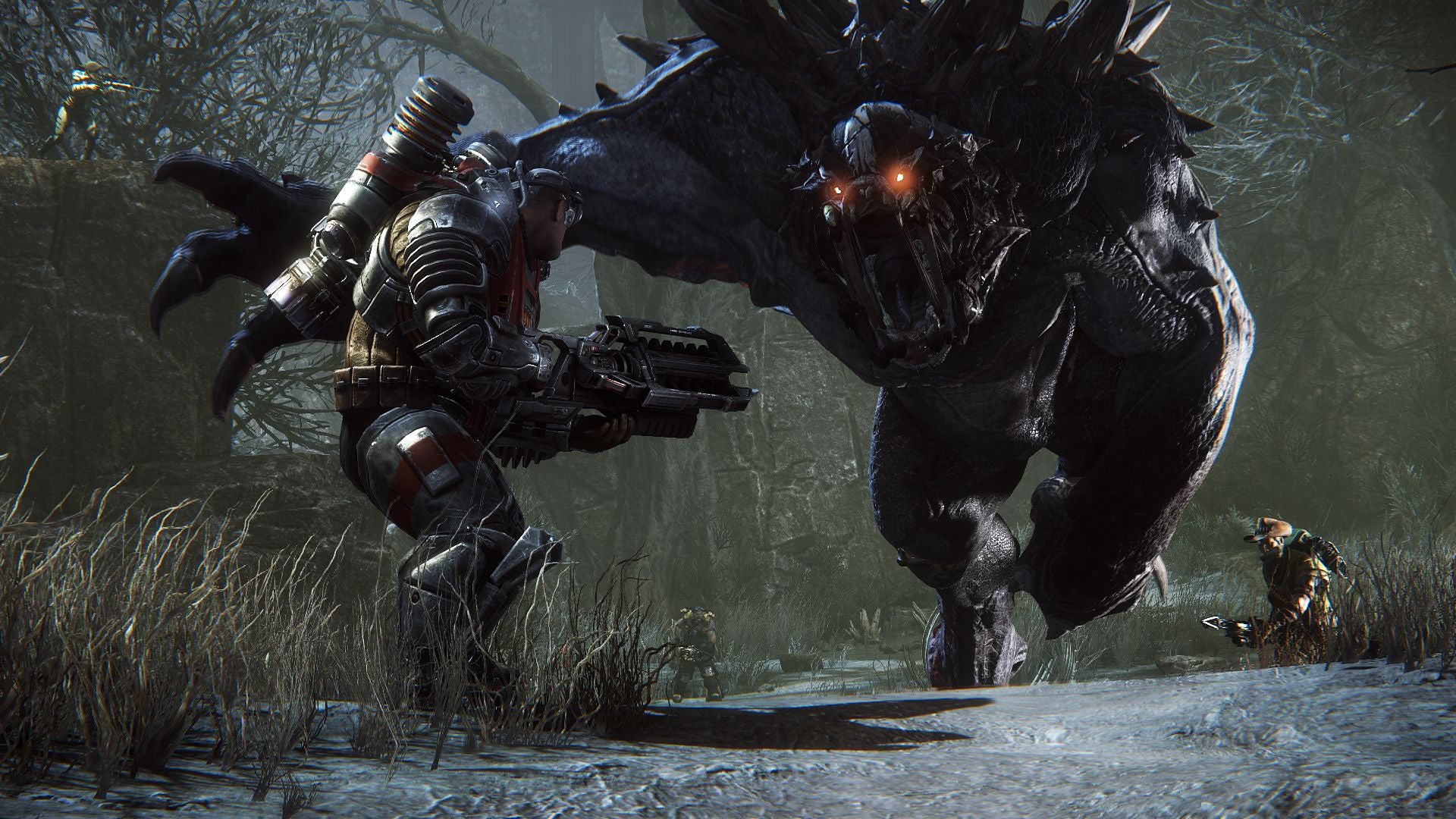
     Every company review about the game was good, usually ranging from 7 to 8 out of 10, but all the user-reviews gave it on average a 4-5 out of 10 calling it "half a game." Nonetheless, I bought the game and I must say, the user-reviews couldn't be more wrong. Out of the box, Evolve gives you a game that offers a simple layout but also becomes a much more sophisticated struggle as you learn the ins and outs of the game. Essentially, you can pick to be grouped up with three other hunters and take down a beast or be the beast yourself and hunt down the hunters as a solo act. Personally, I prefer to team up and take down the monster, but to each his own. 2K and Turtle Rock Studios have done a fantastic job of balancing out the sides (minus the Wraith monster which is at the moment extremely overpowered for most modes, but hopefully a patch will fix that) and the win/loss percentage almost balances out at a perfect 50% for each side. It can't be easy to balance out a 4v1 PvP system with so many dynamics as this game has, once you play the game you'll appreciate the producers job of balancing the sides.

The Trapper, Support, Assault and Medic, Pick Your Poison.
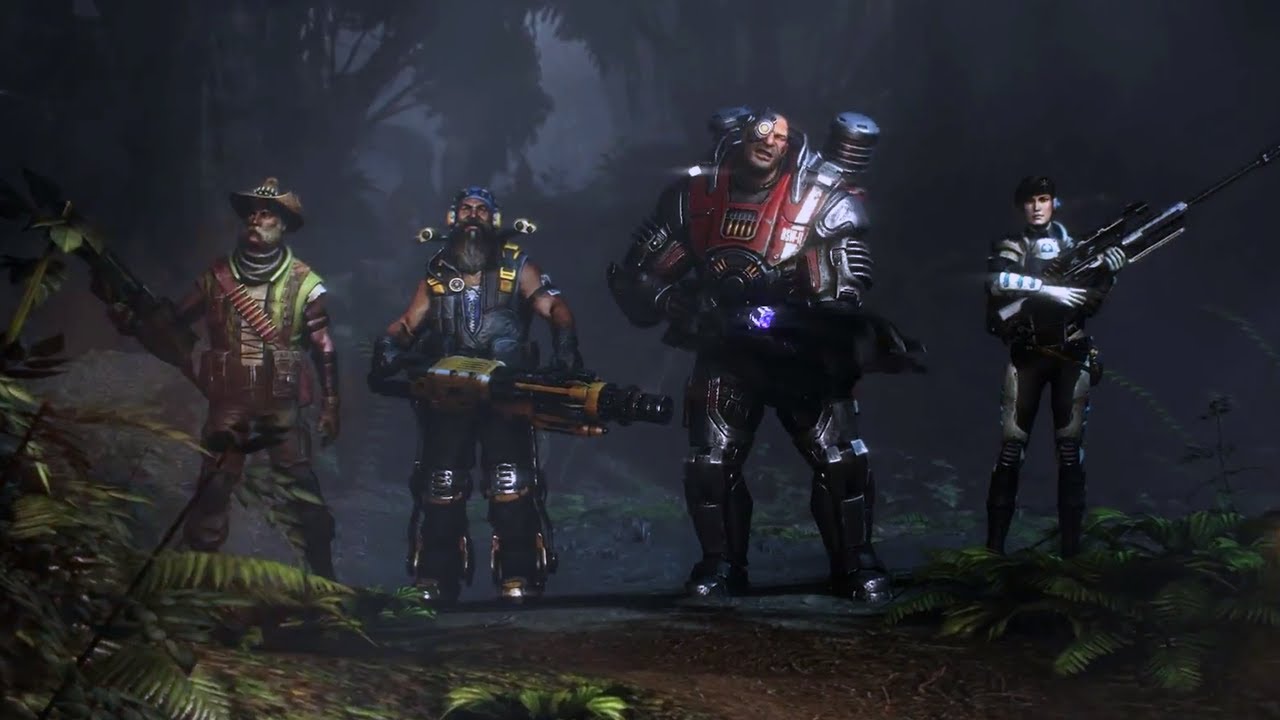
     Let's begin with the hunters, as there are four distinct classes each player is assigned to take down the monster. There's the Assault class, which is essentially there to do the majority of damage to the monster in combat. Next, the Support class, that has unique abilities to assist their fellow hunters in taking down the monster. Third, the Trapper, whose job is to locate, track and trap the monster to force combat. Lastly, the Medic, to obviously heal the team and make sure nobody dies. Each class currently has three different characters in each class, all with special and unique abilities that players can test to see if they like it more than another character, but each class has one trait that stays with each character. For example, in the Medic class, Val is equipped with a gun that uses a beam to heal teammates along with a tranquilizer gun to stun the monster, while Caira is another Medic that can be unlocked as you progress through the class that is equipped with short bursts of super speed along with a grenade launcher that can either heal targets or deal damage to the monster. Despite their differences, all the medics have a healing burst, that can heal nearby targets including themselves. It's fun to mix and match your characters with different classes and find out what works for you and your team. Personally, I love to use Abe the Tracker, and my buddy uses Hank as the Support class, and we work together as I trap the monster in a designated area before my friend wreaks havoc on the distressed animal from above with a precision bombing from above. It's quirks like this that make the game so fun and unique in it's own sense. You cannot defeat the monster on your own, not a chance, you MUST use teamwork in order to win. At times you can stray from your group, but trying to win the game single-handedly will end up in one giant mess. If you're trying to do it all on your own, the Monster is more suited for you.

Goliath, The First Monster You'll Unlock.
     Although I must admit I haven't played with the monster as much as I would have liked to, I can still say that it's an enjoyable time smashing four puny hunters with your giant beast. The controls are a little odd at times and it takes a while to get used to, but once you get the hang of your abilities and figure out the fundamentals of being the monster, it's a great time. Like the hunters, there are three characters to choose from and each of them are powerful in their own ways. The Goliath is the monster you'll start out with and is a melee machine who excels in hand-to-hand combat and brute force. Not a fan? Not to worry. The Kraken comes next, who reigns down electric fury from above. Still not impressed? Unlock the Wraith, the master of stealth and deception. Use all three monsters and figure out which one suits you the best, but don't use the Wraith against me, I can't stand it.

Like the Hunters, As a Monster, There's A Variety Of Styles to Choose From.
     When it comes down to it, the only criticism is that it could be repetitive, or that there's not enough modes to play, hence users calling it "half a game." The game features Evacuation Mode, which is a 5-mission campaign where you're shuffled through the 4 game modes on 10 maps, and depending on the outcome of each mission, there are circumstances added to the next mission. For example, if you fail to hunt down the monster on the first mission, the monster will infiltrate the aviary and unleash a swarm of deadly birds to feast on the hunters in the second round and so on. There are plenty of possibilities and different combinations for Evacuation, so if you're getting bored with just hunting down the monster over and over, try out this mode, it features a few different objectives rather than just finding and killing the beast. If you don't have online, not to worry. Evolve features offline play where your companions and opponents are filled by bots. Sorry folks, no split-screen or local co-op. The bot feature is nice, because your progression offline counts towards online and vice versa, so you can practice and train as a certain character offline before unleashing him on your friends online. If you don't have online, I'd be a little more hesitant to pick up this game, simply because theres no local co-op. 

Different Combinations of Characters Allow For Some Interesting Advantages.
     But really, why is everyone so harsh about this game? I've logged about 9 hours or so into the game since purchasing it and I'm still hooked whenever I hop on and play. I think most of the "haters" simply need to find some friends to play the game with, as it's much more enjoyable with your buddies as you try and communicate to take down your foe. If you like going solo, then hop on as the monster and ruin the hunters' day. Playing solo and teaming up with randoms can be a pain at times, as some people simply don't know how to play their role. I've had a few encounters with medics that try and take down a Goliath single-handedly in fist-to-fist combat and you know how that ended. People say it's an "All-DLC" game, that will ravage your wallets any chance they get, and that can't be any further from the truth. Personally, I'm satisfied with what I got out of the box, and if the DLC they offer isn't good, don't buy it, they're not forcing you to do it, it's just for players that want to expand their limitations of the game. There are rumors of new hunters and monsters on the way, which could be interesting and add a whole new dynamic to the game. Until then, I'll stick to teaming up with my friends and hunting down monsters with my boy Abe. If you're looking for a quality game that's a hoot with your buddies, look no further than Evolve.

Thursday, 12 February 2015

Is Victoria A Viable Sports Market?

    With the Victoria Highlanders recently ceasing operations, and a string of financial meltdowns over the years in local sports franchises, is Victoria a viable sports market? In some cases, teams have had plenty of fan and community support, but still failed to make ends meet in the office. With only a handful of sports teams being able to sustain a profitable business over the long haul, the Victoria sports community is beginning to become skeptical on the durability of sports teams on the island, leaving sports fanatics wondering just what does it take to keep a franchise above ground.

     The Victoria Highlanders news came out of right field (or maybe mid-field? Terrible pun attempt)
and shocked the soccer community, as pro-level soccer has left the Capital City, at least for the time being. Owner Alex Campbell Jr. decided to pull the plug on the operation after 7 seasons with zero profit in each campaign. This comes at a bitter time, as the team itself was on the rise, coming off back-to-back playoff appearances and a friendly against the Glasgow Rangers that drew in nearly 6,000 spectators to the event. The fans were behind them, the team was winning, and yet the team still couldn't add up the numbers. Turns out, the business structure was the eventual downfall of the team. It's pretty simple: too many expenses, too little profits. With no support for upcoming youth and high school soccer players to associate with, it leaves a massive gap to fill on the island in terms of the expansion and development of the sport. While the Highlanders have no hope of being revived, former GM Alex DeFrias hinted that a new team could be in the making to return to the USLPDL for 2016, so there may still be hope for the soccer faithful in YYJ. 

     Another team that has recently been in financial hot water despite a growing fanbase: the Victoria Harbourcats. As a baseball lover, my heart was in my throat when I first received news that the team
had been sold to an off-island company and the team's future was entirely up in the air. Luckily, the new ownership group plans to keep the team in Victoria and run it for the time being while they look for a suitable group to sell the team to. But still, the fact that the team nearly folded due to financial issues just a handful of years after we've seen two baseball organizations come and go was a little eye-opening. Many coaches and staff went weeks throughout the season without pay, and the team was scavenging for profits despite looking like a well-oiled machine on the outside. Here in Victoria, we've had a handful of baseball franchises fold due to financial issues, and this winter we nearly saw another team bite the dust.

     Hockey isn't safe either. While some of the smaller markets on the northern island seem to be having the majority of success, lower island teams struggle to make ends meet on a regular basis.
Each team has their own causes, but a mutual factor is the number of teams on the South Island, each within short drives between them. With the exception to the Victoria Cougars program and a couple others, local junior hockey teams in the southern part of the island dig deep to keep the wheel spinning each season. It seems like the further north you go, the more success there is. Take the Campbell River Storm for example: a VIJHL club based in a very small town, but with the right people and the right mindset, the team packs it's arena every home game and has the entire town behind it. The Victoria Grizzlies are the most noted hockey club on the island to be going through financial troubles, owing a large sum of money to numerous former employees. As a big Grizzlies fan in my youth, seeing the plummet of this franchise has been tough to watch, as a rink that was once filled with thousands now fighting to draw a decent crowd on a Saturday night. Time will tell if the Grizz can find their way back to the glory days.

     However, there is evidence that Victoria can be a viable sports market. Take the Victoria Shamrocks for example, they've been around for decades, built an extremely passionate fanbase, consistently succeeded on and off the floor and continue to be on the rise. Being an outsider for my
whole life, following the team as close as I did last season really showed me how much this community rallies around that franchise, and how rich and legendary that organization really is. The Victoria Royals are another solid organization that has thrived since arriving on the scene in 2011, and although they're not pulling in 7,000 fans to their regular season games anymore, they're still drawing 5,000 on a good night and with the team looking to improve on a solid playoff run last season, the Royals could send this city into a craze if they can assemble a dynasty like the Portland Winterhawks/Kelowna Rockets/Vancouver Giants have over the years.

As a local sports fan myself, I want nothing more than local teams to thrive. While I'm no financial wizard, it's not hard to see that Victoria can be a city where local sports can succeed and then some, it's just a matter of the right business structure to make the numbers add up. While we mourn the loss of the Highlanders, rest assured. This city can still support local sports franchises. The problem isn't in the stands, it's in the front offices.  


Wednesday, 14 January 2015

The Future of the Enforcer in the NHL

John Scott (SJ) and Tom Sestito (VAN).
Love it or hate it, the days of the goon are over. With the exception of John Scott of the San Jose Sharks, the extinction of the hulking bears on skates has been progressing for a few years now, and it seems the transformation is nearly complete. The last true fighters of the NHL have already come and gone, with the recently retired George Parros being the last pedal of the flower to finally wither. With only a small (or big depending on the way you look at it) handful of one-dimensional fighters
remaining in the league, teams are now re-inventing the way the enforcer is defined in this league.

The "Slapshot" style of hockey originated in the early 70's, where bottom-feeder teams in the NHL
Dave Hanson from Slap Shot.
such as the recently added Philadelphia Flyers were struggling to find skill to put on their team to attract a fanbase, so they would go on to sign goons and enforcers to attract a crowd and cheer on the brutality of the game. The peak of the goon would come in 1974 and 1975, when the Flyers intimidated their way to victory and back-to-back Stanley Cup Championships, tagging them the "Broad Street Bullies" by the NHL faithful. The Montreal Canadiens would eventually outclass the Flyers and restore peace in the NHL to a degree, with the Flyers never being able to capture their third cup with their "intimidation" tactics.

Fighting has always been a part of hockey, and to suggest that fighting is leaving the game any time soon is inaccurate. However, teams are now redefining the way an enforcer is defined. Long gone are the 6'5 giants (minus Scott) that simply hop on the ice with the intent to either demolish an opponent
Paul Kariya seeing stars, 2003 SCF.
with a giant hit or drop the gloves and beat someone senseless. This is nothing but good news for the smaller, more skilled players in the league who arguably become more valuable with the removal of "targets" on their back from goons and heavy hitters. The NHL is also cracking down on senseless hits and violent intentions, something that the stars of yesterday could only dream of (see Mike Modano, Paul Kariya etc. etc.), and this will prolong the productivity and careers of the league's superstars while the "power-forward" role will still need some tweaking. It's not like the league doesn't encourage contact and strength, but the way the game is played and officiated has changed drastically over the past decade alone.

Moving forward, the label "enforcer" will be thrown around profusely, as it always has been, but the role of the enforcer in the NHL will be heightened, and the expectations (and limitations) of the
Derek Dorsett of the Canucks.

player will be steeper as the game inevitably becomes faster and faster, with more skill and speed joining the league every day. Players like Derek Dorsett, Jared Boll, Steve Downie and Travis Hamonic will embrace the title if needed, but also bring a skill-set to the game and can contribute at either end of the ice, rather than bring in a John Scott, Cody McLeod, Tim Jackman, Brian McGrattan, Kevin Westgarth style of enforcer that could knock the lights out of any of the players listed above them, but couldn't stickhandle around a pylon to save their lives.

In a revamped National Hockey League that demands skill and speed, the days of the hulking goon are over. It's not the end of fighting in hockey, or the NHL for that matter (the goons always find their way around the minors simply for the entertainment factor), it just means that if you want to drop the gloves, you better be able to do something with the gloves still on if you want to get paid over a million dollars a season playing in the most skilled league on the planet. We will miss the Stortini vs. Parros showdowns we all knew we were in for when the Oilers played the Ducks, but we still have those incredible Flyers / Penguins blood baths, don't we?